
Complete Guide for Padel Shoes

How to choose the right padel shoes
Choose the right outsole, fit, stability and cushioning for the courts you use and the way you move.
The best padel shoe is the one that fits securely and gives you the right level of grip on your usual court. Start with the surface: a deeper herringbone tread is useful on courts with visible loose sand, while an all court or padel-specific outsole is often a better starting point on newer courts with less loose sand.
Then check the fit and lateral stability. Your heel and midfoot should stay in place when you stop or push sideways, while your toes still need enough room. Cushioning matters, but a very soft shoe or one with a high midsole can feel less stable and less connected to the court than a firmer, lower model.
What should you look for in padel shoes?
A padel shoe needs to handle short bursts of acceleration, sudden stops, rotations and repeated lateral movements. It is rarely a single feature that determines whether a shoe is right for you. More often, it comes down to a combination of factors. We recommend considering these four elements when choosing the best padel shoe for your needs.
Which outsole suits your padel court?
Padel courts use synthetic turf, but the fibres, level of wear and amount of visible sand vary. Those differences matter more than the colour of the turf or whether a venue casually calls the surface “Mondo”. Mondo is a surface manufacturer, and its systems can also use silica sand as infill.
Look at the court you actually use. If loose sand moves under your shoes, you normally need a tread that can reach through it. If the surface has little visible sand and already feels grippy, a deep clay court pattern can provide more grip than you need.
| What the court feels like | Useful starting point | Trade-off to consider |
|---|---|---|
| Visible loose sand; easy to slide | Clay court or pronounced herringbone outsole | Deep tread can feel too planted on a cleaner, grippier court. |
| Limited visible sand; consistent modern turf | Padel-specific, mixed or all court outsole | Very shallow tread may not bite enough if sand accumulates. |
| You play at several venues | Versatile mixed or padel-specific outsole | A versatile sole is a compromise rather than the most specialised option. |
You need enough traction to push off and stop with control, but not so much that the shoe catches when you rotate. The court condition, wear and the way you move can all change how the same outsole feels.
Clay court, all court or padel-specific outsole?
The images below show the three broad outsole types you will encounter. Treat the labels as guides rather than universal standards, as tread depth and pattern vary between brands.
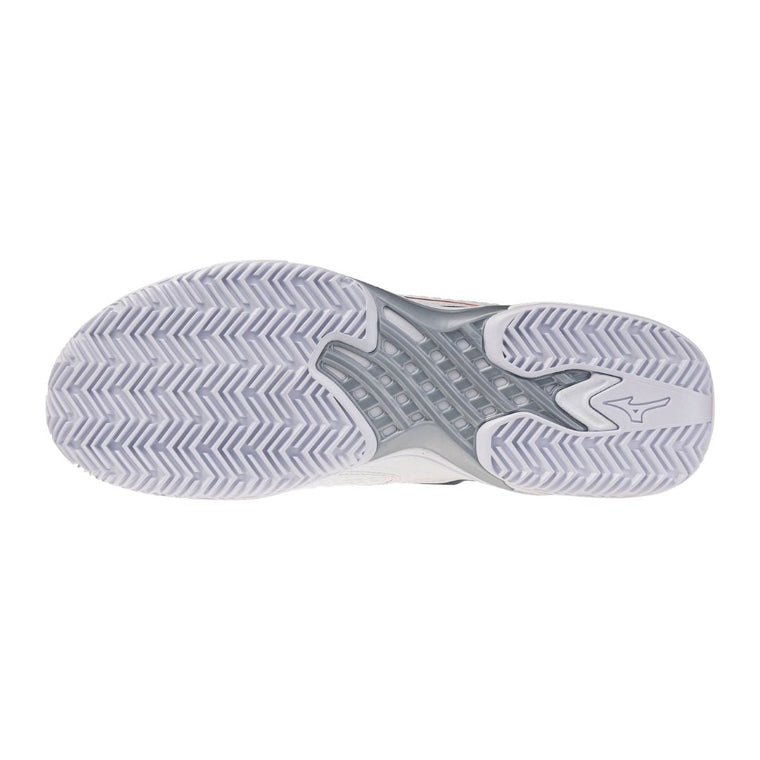
Clay court outsole
A clay court outsole is recognised by its herringbone pattern. The deep zigzag grooves allow loose sand to move through the tread instead of accumulating beneath the foot.
Watch for: The depth and spacing of the herringbone pattern still vary between models.
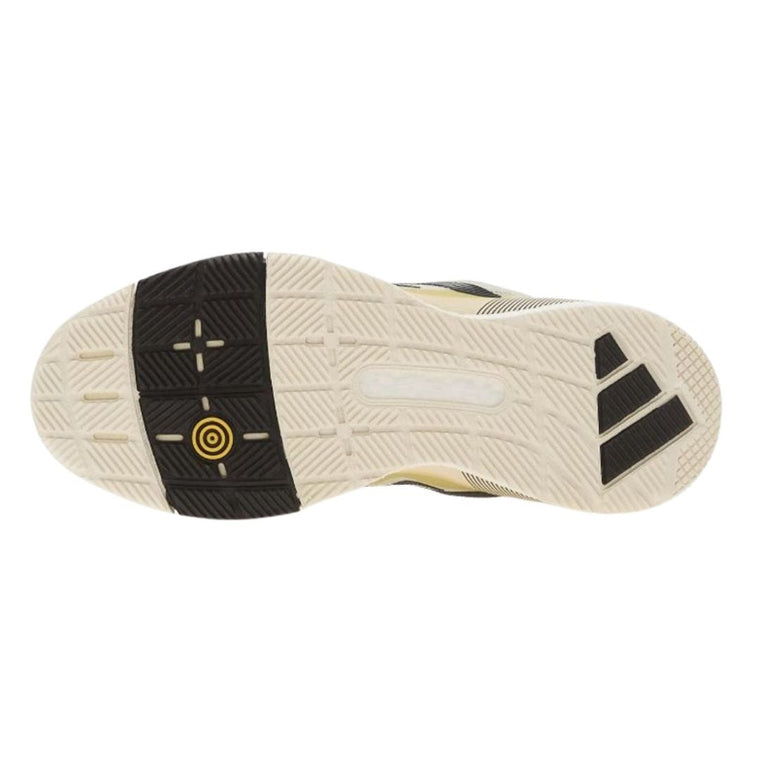
All court outsole
An all court outsole normally uses a shallower, segmented tread with several grip zones. It is the least standardised category, so inspect the actual sole rather than relying on the name alone.
Watch for: Not every all court outsole behaves alike, and some hard-court tennis soles are less suitable for sandy turf.
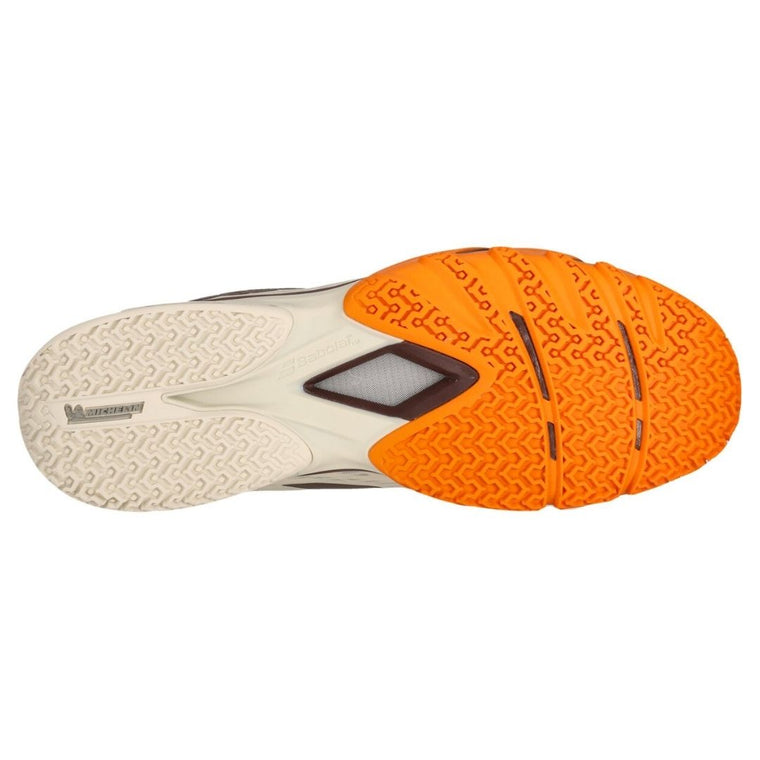
Padel-specific outsole
A padel-specific outsole may combine herringbone grooves, studs, pivot zones and flex channels. These elements are intended to support traction, rotation and changes of direction.
Watch for: “Padel-specific” is not a universal outsole standard, so patterns can differ considerably.
How should padel shoes fit?
Padel shoes should feel secure around the heel and midfoot without squeezing or creating pressure points. Your foot should not slide forward when you stop, and your heel should not lift noticeably when you walk or push off.
Leave enough room for your toes not to hit the front when you stop. Width matters just as much: a shoe can be the right size on paper and still be wrong if its overall shape is too narrow or too wide for your foot.
Use the fit as a practical filter when creating your shortlist. Explore Padellife’s collections of wide padel shoes, normal-fit padel shoes and narrow padel shoes, but remember that the exact shape can still vary between brands and models.
Men’s, women’s and unisex models
These labels may reflect the size range, the shape of the shoe or both, but the difference is not the same across brands. Treat the label as a starting point. The best option is the model that secures your heel and midfoot while giving your forefoot the space it needs.
You can compare men’s padel shoes, women’s padel shoes and unisex padel shoes at Padellife. Choose according to the actual fit rather than the category name alone.
How do stability, cushioning and weight change the feel?
Shoe design is a trade-off. A light, flexible model can feel quick and close to the court, while a more structured model can provide a firmer platform and more protection from repeated impact.
Look for a heel counter, secure lacing, support through the midfoot and an outsole platform that does not collapse when you load the outside edge.
More midsole foam can soften impact and feel more comfortable from the first wear. Too much softness can make the shoe feel less direct or allow more movement when you push off.
Lighter shoes often feel more agile, but low weight alone does not make a shoe better. Check that the upper and base still hold your foot during stops and lateral pushes.
Should frequent players choose more cushioning?
Playing more often increases the value of comfort, durability and a midsole that continues to feel supportive. That does not automatically mean choosing the softest shoe. Players with a history of foot, ankle, knee or back problems should seek individual advice from a qualified specialist rather than treating footwear as a medical solution.
Can you play padel in tennis or running shoes?
A suitable tennis shoe can work for padel, especially when its outsole matches the surface and the shoe provides enough lateral support. Dedicated padel shoes increasingly use outsole patterns and flex zones designed for multidirectional movement on synthetic turf.
Running shoes are a poor choice for padel. They are designed mainly for forward movement and often use taller, softer midsoles with less side-to-side support than padel shoes. That combination can feel unstable when you stop or change direction.
How different shoe designs solve different needs
These models from MyPadellife.com illustrate three different choices. The descriptions below are based on documented construction and positioning, not a claim that one model is universally best.
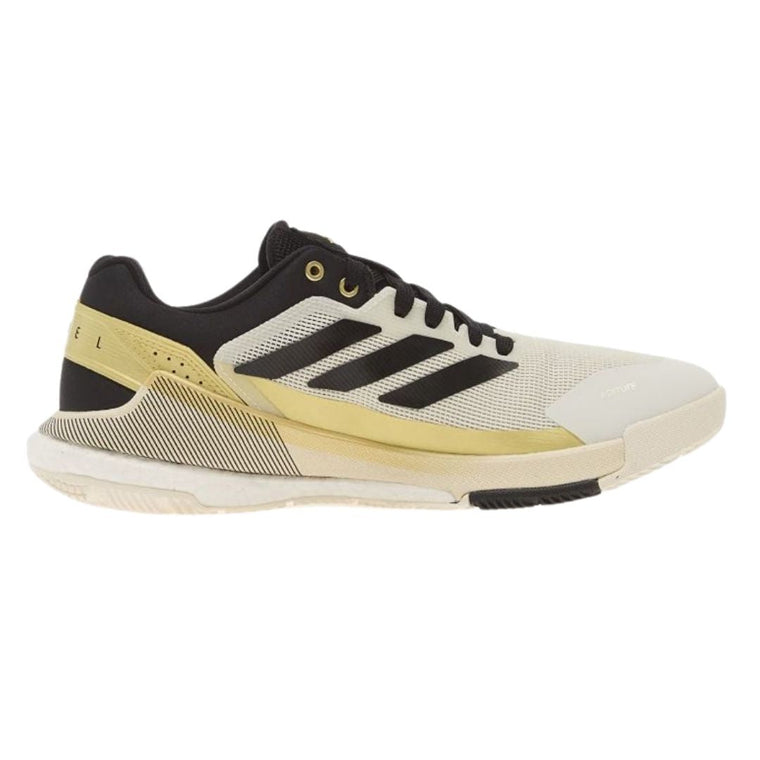
Adidas Crazyquick Boost Men
A lightweight padel shoe with a clean, popular design. BOOST foam in the midsole absorbs impact and adds energy return, while Slingframe supports the foot during lateral movement. The Adiwear all court outsole makes it the most versatile surface option of the three.
- Consider it if: you prioritise low weight, responsive cushioning and a sole that can work across different padel courts.
- Choose differently if: you want the deeper grip of a clay court sole for a court with substantial visible sand.
The cushioning comes from Adidas BOOST foam rather than a separate gel insert.
See Adidas Crazyquick Boost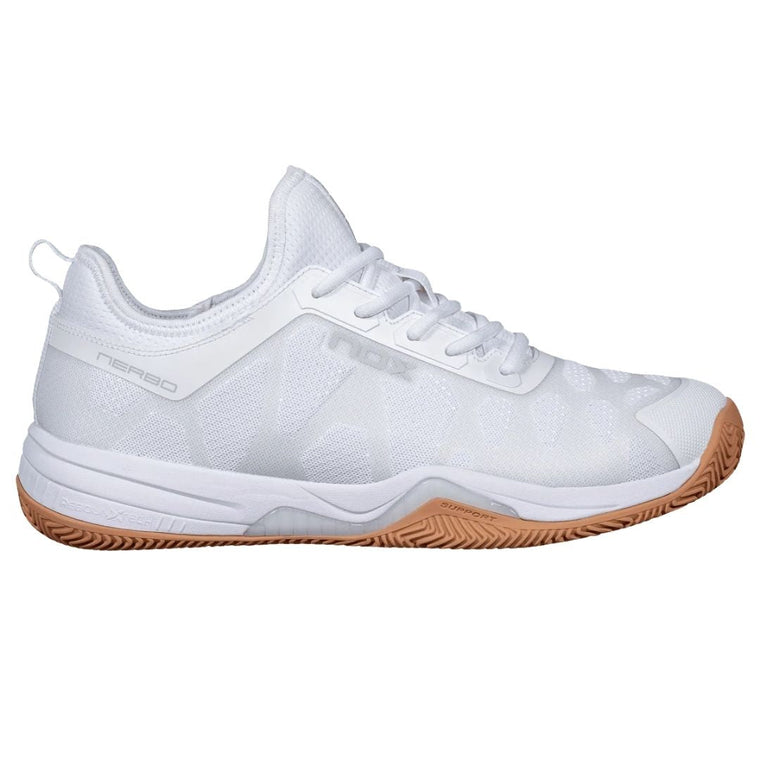
Nox Nerbo
A dedicated padel shoe with a mondo outsole that combines herringbone tread and small studs. A wide contact area and lateral reinforcement support changes of direction, while the breathable mesh upper, EVA-based Strobel construction and low-density phylon midsole balance cushioning with flexibility.
- Consider it if: you mainly play on mondo-style courts and want a padel-specific shoe with lateral support and comfortable cushioning.
- Choose differently if: your usual court has a heavy layer of loose sand that calls for a deeper herringbone tread.
Actual grip will still depend on the amount of sand, outsole wear and court condition.
See Nox Nerbo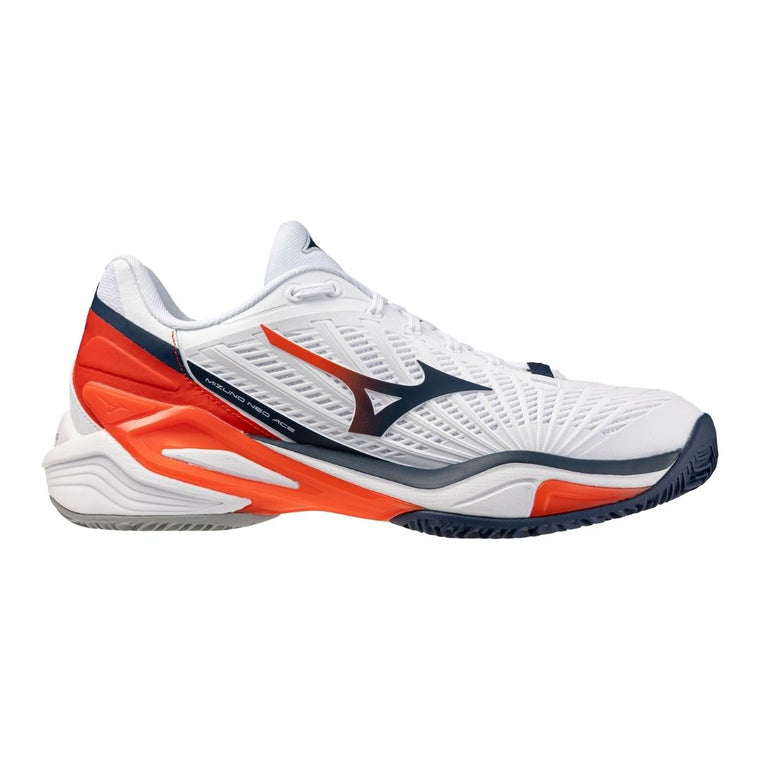
Mizuno Neo Ace CC
A stability-focused clay court shoe with Mizuno Enerzy XP throughout the midsole for high cushioning and energy return. Agility Frame supports the foot from the midfoot to the heel, while the CC outsole provides pronounced grip on courts with visible loose sand.
- Consider it if: you want a highly stable, well-cushioned shoe for a sandier court without giving up a responsive feel.
- Choose differently if: you play mainly on clean, grippy mondo turf where a clay court sole may feel too planted.
This is a unisex clay court model offering a high level of stability and cushioning.
See Mizuno Neo Ace CCWhich padel shoes should you choose?
When should you replace padel shoes?
There is no reliable replacement interval that applies to every player. As a rough rule of thumb, padel shoes may retain adequate grip, cushioning and support for around nine months if you play two to three times a week. However, factors such as how often you play, the way you move, your body weight, the court surface and the shoe construction all affect the rate of wear. Rather than relying on age alone, look for the following signs that your padel shoes need replacing:
- Replace the shoes when the outsole no longer gives predictable grip.
- Watch for a compressed midsole that feels flat or uneven.
- Check whether the heel counter or upper has stopped holding your foot securely.
- Retire a pair if the outsole separates, the upper tears at a support point or the shoe tilts from uneven wear.
After play, loosen the laces, remove the insoles if practical and let the shoes dry at room temperature. Do not leave damp shoes sealed in a padel bag, and avoid direct heat from a radiator. Brush loose sand from the outsole and use the shoes only on court to reduce unnecessary wear.
For odour-control accessories, see SmellWell products at MyPadellife.com.
Quick answers about padel shoes
Do beginners need padel shoes?
A beginner does not need the most advanced model, but should use a stable court shoe with an outsole suited to the surface. Running shoes are a poor choice for regular padel because they are not built primarily for repeated lateral stops and changes of direction.
Are clay court tennis shoes good for padel?
They can be. Their herringbone tread is useful on courts with visible loose sand. On cleaner, grippier turf, a mixed, all court or padel-specific outsole may allow easier rotation.
What is a Mondo sole?
Retailers often use “Mondo sole” for padel-oriented outsoles intended for modern turf with less loose sand. It is not a universal technical standard. Mondo is a court-surface manufacturer, so compare the actual tread pattern and the conditions at your venue.
Should padel shoes feel tight?
They should feel secure, not painfully tight. The heel and midfoot should stay in place, while the toes need enough length and width for braking. Numbness, pressure points and persistent rubbing indicate a poor fit.
Is more cushioning always better?
No. Cushioning can improve comfort and soften impact, but excessive softness or stack height can reduce court feel and lateral stability. The right balance depends on your body, preferences and playing frequency.
Choose from the ground up
Start with the court surface, then consider fit, stability and cushioning. A premium shoe is still the wrong choice if its outsole does not suit the surface or its shape does not suit your foot.
Once you know your court type and fit, use them as your first filters. Then compare the remaining models by stability, cushioning and weight to find the balance that suits how often you play and the support you need.
Explore all padel shoes

